Daily Signal Archive
The Value Signal — daily healthcare value intelligence briefings
The Value Signal — October 24, 2026
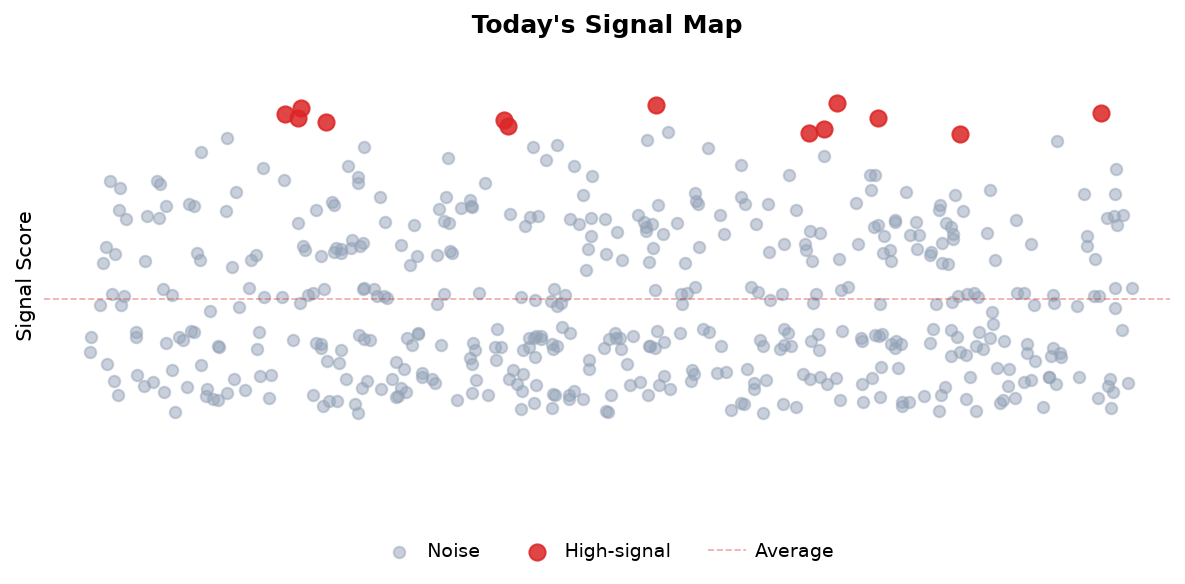
942 articles scanned · 14 high-signal
Signal Map
Executive Summary
Value-based care is being reshaped less by care delivery than by contested rules: plans are suing over ratings, CMS is accumulating enforcement leverage, and Medicaid coverage is eroding ahead of schedule.
On Star Ratings, Modern Healthcare reports that Centene has sued over its 2027 Medicare Advantage ratings, the latest sign that quality scores are now litigated as balance-sheet assets rather than accepted as clinical verdicts. The fight over measurement extends to Risk / Benchmark design, where Health Affairs makes the case for advancing social risk adjustment in value-based payment, a reform that would redistribute bonus dollars toward safety-net providers if adopted. In Value-based Care, Hospitalogy captures a sector shifting toward demonstrated performance, arguing that LEAD is a no-go, that health systems should prepare for mandatory risk models, that density beats scale in Medicare Advantage (MA), and, in Privia's framing, that "boring" execution wins. On Medicare physician payment, Medical Economics warns against fixing surgery's Medicare cut problem at primary care's expense, a zero-sum budget fight that directly threatens the primary care base VBC depends on. On ACO design, an AJMC contributor argues that kidney care cannot be left behind as Medicare's new ACO model begins. On OIG / Oversight, AAPC reports that CMS has gained permissive exclusion authority, which gives the agency a sharper tool against participants it deems noncompliant.
Medicaid is contracting faster than planned. The Commonwealth Fund finds the uninsured rate climbing even before the 2027 Medicaid cuts take effect, and Hooper, Lundy & Bookman details a new federal policy stripping Medicaid from certain legal immigrants and refugees. On implementation, KFF examines how historical SNAP work-ability processes could inform the still-uncertain verification of the medical frailty exclusion, flagging a likely source of administrative churn. Healthcare Dive reports that Molina has joined insurers claiming a Medicaid recovery as states raise rates and its CEO says the rate-trend imbalance "appears to have stabilized." In the same outlet's coverage of Prior Authorization, Amazon, Google, Meta and other employers pledged faster, electronic prior authorizations for self-funded plans covering millions. Employers moving ahead of regulators on utilization management raises the bar that MA and Medicaid plans will be measured against.
In this edition
- Star RatingsCentene sues over 2027 Medicare Advantage ratings — Modern Healthcare
- Risk / BenchmarkAdvancing Social Risk Adjustment In Value-Based Payment — Health Affairs
- Prior AuthorizationFive major companies pledge faster, electronic prior authorizations — Healthcare Dive
- MedicaidNew Federal Policy Strips Certain Legal Immigrants and Refugees of Medicaid — Hooper, Lundy & Bookman
- MedicaidMolina joins Medicaid recovery bandwagon despite mixed Q3 — Healthcare Dive
- MedicaidAssessing Ability to Work: How Historical SNAP Processes May Vary from Medicaid — KFF